
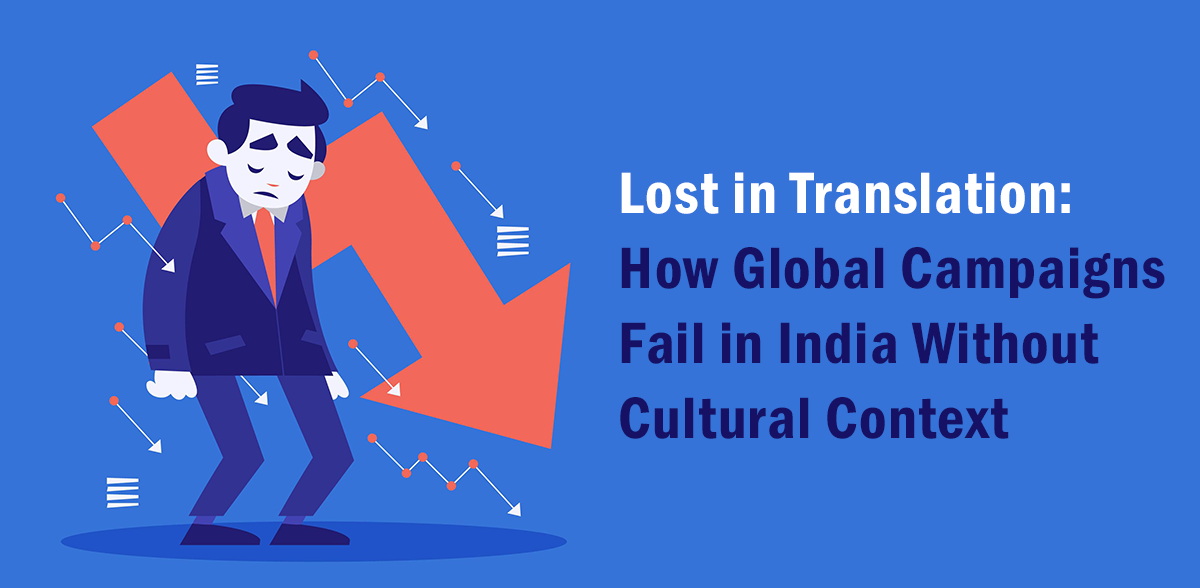
“We thought it was funny.” “They thought it was offensive.”
That’s what a major food company said after airing a hilarious ad in India with a punchline that fell flat and caused criticism. The marketing performed admirably in Western markets. However, in India, the tone was contemptuous, and the cultural signals were off the mark, resulting in embarrassment, zero traction, and a campaign that was dropped within days.
This isn’t unusual. It’s a narrative that you often hear from multinational corporations in India: the same marketing, message, and good intentions; but entirely lost in translation.
If you want to expand in India, keep in mind that it requires more than simply translation. It requires cultural context. And disregarding this might turn even the strongest campaign into an expensive flop.
Why Translation Alone Does Not Work in India?
With over 20 official languages, 700+ dialects, and varying lifestyles throughout its states, India does not have a single target audience. However, many worldwide corporations believe that just translating English advertising into Hindi (or another regional language) is sufficient.
Here’s why that tactic frequently backfires:
1. Words have various meanings across areas
A word that is pleasant in Mumbai may appear condescending in Lucknow. Literal translations might cause confusion or worse, insults, embarrassments or criticism.
2. Visuals do not always resonate
Western layouts or coastal sceneries may not reflect daily living for most Indian homes, particularly in Tier 2 and 3 cities.
3. Humor, passion, and tone are fundamentally cultural
What is deemed humorous in New York may be considered nasty in Patna, India. Sarcasm may not always translate properly.
4. Festive timing is important
Launching a large promotion over Thanksgiving may sound reasonable worldwide, but in India, you cannot miss the Diwali, Onam, or Pongal season, when actual spending surges.
The disparity here is more than simply linguistic. It is emotive, contextualized, and cultural. And here is where Indianization comes in; not just to prevent failure, but to foster genuine connection.
A Quick Guide for Brands on Avoiding Cultural Mismatches
If you want your campaigns to be successful in India, don’t simply translate them. Localize. Indianize. Here’s how.
1. Understand the regional mindset.
Move beyond demographics. Understand what drives your target audience in diverse areas, including ambitions, habits, family roles, and even taboos.
2. Indianize emotions, not just language.
It is not about transitioning from English to Hindi. It’s about striking a genuine emotional tone; whether it’s pride, joy, nostalgia, or belonging.
3. Use regional-specific visuals and characters.
Replace generic models with people that appear and dress similarly to your target demographic. A young woman wearing a saree in Chennai may connect more than someone dressed in Western attire in a Bengali ad.
4. Participate in local festivals and moments.
Celebrate regional holidays like Chhath in Bihar, Vishu in Kerala, and Baisakhi in Punjab with related stories, customs, and offers.
5. Engage local creatives and influencers.
Collaborate with regional authors, designers, and influencers who understand cultural, linguistic, and humorous nuances.
6. Test the message before scaling.
Before launching on a nationwide scale, first start with testing in several cities or states. What works in Pune can fail in Bhubaneswar.
7. Pay Attention to Visual Symbols and Color Use.
Colors and symbols have various meanings; white represents sorrow in certain regions of India, while fortunate in others. So, be careful and well-aware.
Conclusion
In a country with as rich diversity as India, your brand cannot afford to be tone-deaf. You can have the right product, the best intent, and a fantastic worldwide strategy, but it won’t work without cultural context.
Indianization connects your worldwide identity with India’s localized realities. It enables you to connect with your target audience in India.
So, before launching your next ad in India, consider if you are communicating in their language or just translating your own. For any assistance, reach out to our Indian market experts.