
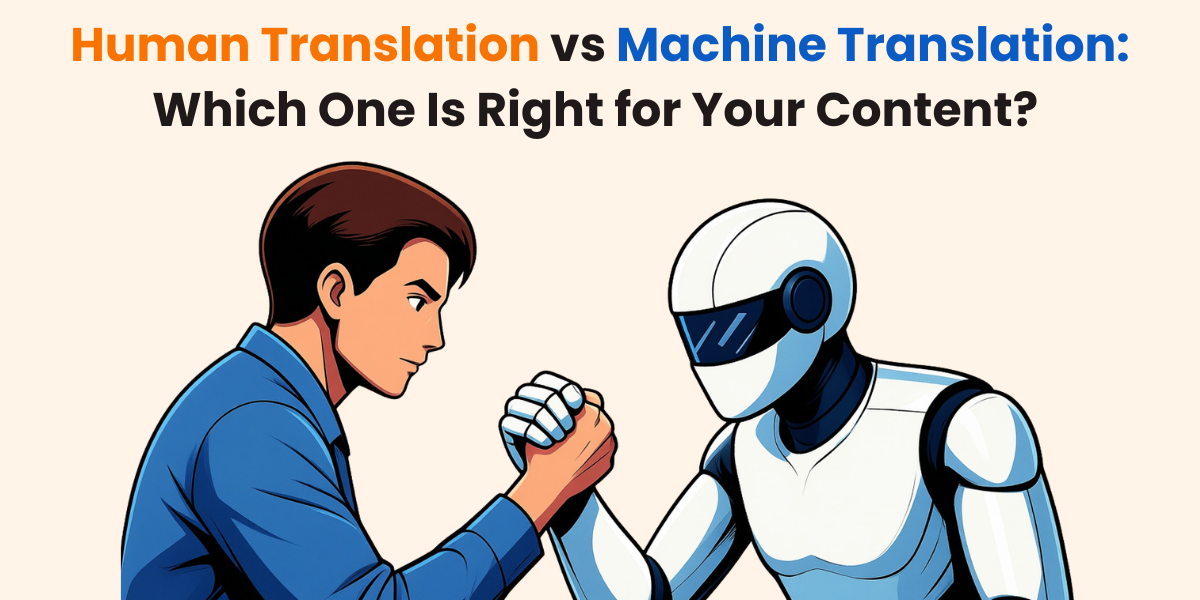
Translation is no longer a choice between humans and machines; it is increasingly about knowing where each works best. Human translators bring context, cultural understanding, creativity, and judgment that machines can struggle to replicate. Machine Translation (MT), on the other hand, offers speed, scalability, and efficiency for large volumes of content. The real advantage often comes from combining technology with human expertise through Machine Translation Post-Editing (MTPE).
So, which approach should businesses choose? The answer depends on the content, audience, purpose, and risk involved.
Key Takeaways
- Human Translation is particularly valuable for context, creativity, cultural nuance, and high-risk content.
- Machine Translation offers speed, scalability, and efficiency for large volumes of content.
- MT quality can vary significantly depending on the language pair and content type.
- MTPE combines machine efficiency with human linguistic expertise.
- The right translation workflow depends on content, audience, purpose, risk, quality expectations, and volume.
- The future is less about Human vs Machine and more about Human + Machine.
As businesses expand across markets, translation has become an important part of global communication. Websites, product information, software interfaces, legal documents, marketing campaigns, training content, and customer support may all need to be available in multiple languages.
Traditionally, this work relied almost entirely on professional human translators. Today, advances in Neural Machine Translation (NMT), generative AI, and language technologies have made machine-assisted translation faster and more accessible than ever.
However, speed does not automatically mean suitability.
Human Translation (HT) is performed by professional linguists who understand not only the source and target languages but also context, tone, terminology, culture, and audience expectations. This makes human expertise particularly valuable for creative, sensitive, highly specialized, or high-risk content.
Machine Translation (MT) uses computational models to automatically convert content from one language to another. Modern MT can process large volumes of content quickly and consistently, making it useful for high-volume and time-sensitive translation requirements.
Recent research illustrates this evolving relationship. A 2025 PLOS ONE study of 31 translation and interpreting students working with Chinese-English translation found that Machine Translation Post-Editing generally outperformed Human Translation in speed, technical efficiency, and output quality, with the extent of the advantage varying by translation direction.
The European Commission also demonstrates how machine translation is becoming part of large-scale multilingual workflows. Its eTranslation service processed more than 890 million pages in 2025, up from 19 million pages in 2017, when the service was launched.
This doesn’t mean machines have replaced translators. Instead, it shows how translation workflows are changing.
Human Translation or Machine Translation? Key Factors to Consider
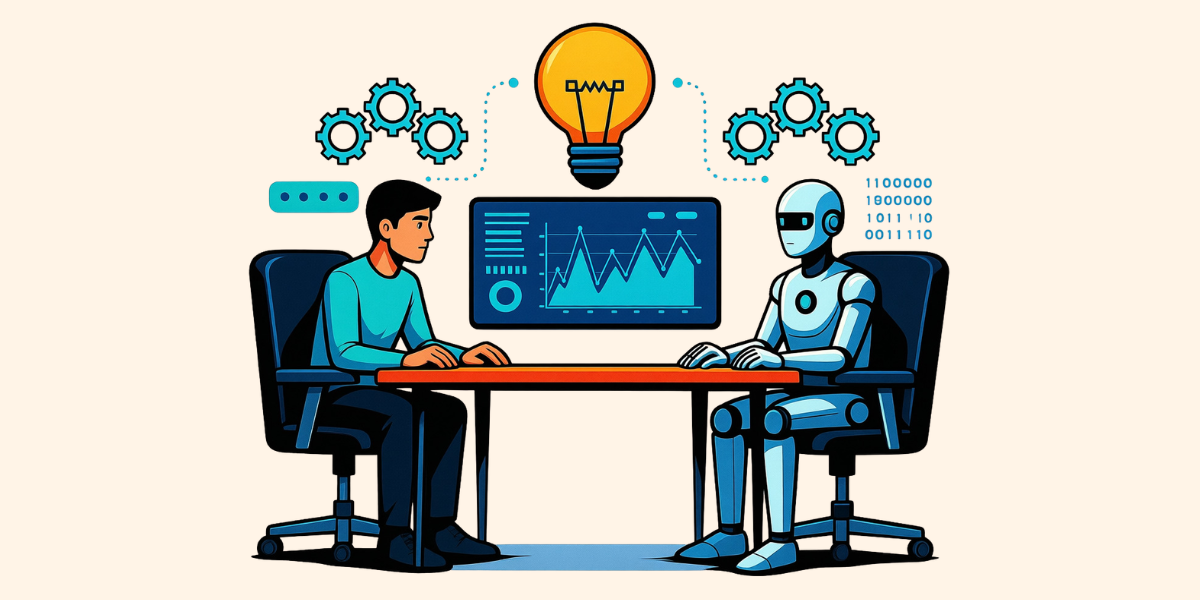
There is no universal winner. Businesses should select the approach based on the purpose and requirements of the content.
1. Quality and Context
Human translators can interpret context, ambiguity, cultural references, tone, humor, idioms, and implied meaning. This is particularly important for marketing, creative content, legal communication, and culturally sensitive material.
Machine Translation can produce highly useful results, but output quality can vary depending on the language pair, terminology, content type, and complexity. Even the European Commission notes that the quality and accuracy of machine translation can vary significantly between texts and language pairs.
2. Speed and Scale
This is where MT has a major advantage.
Machines can process enormous volumes of content in a fraction of the time required for manual translation. For organizations dealing with millions of words, frequently updated content, or multiple languages, this scalability can be extremely valuable.
3. Cost and Efficiency
Machine Translation can reduce the amount of manual effort required, especially for high-volume content. However, “machine translated” does not necessarily mean “ready to publish.”
For important content, human review may still be required to identify terminology errors, mistranslations, awkward phrasing, cultural issues, or inconsistencies.
This is where Machine Translation Post-Editing (MTPE) becomes valuable: the machine creates the initial translation, while a linguist reviews and improves the output.
4. Creativity and Cultural Adaptation
Machines can translate language, but effective global communication often requires more than translating words.
A slogan may need to be rewritten rather than translated literally. A joke may need cultural adaptation. A product name may need to be evaluated for meaning, pronunciation, or associations in another market.
5. Risk and Content Sensitivity
Not every piece of content carries the same level of risk.
For internal, repetitive, or informational content, MT may be highly practical. But legal contracts, medical information, financial communication, safety instructions, or brand-critical marketing content may require greater human oversight.
The question should therefore not simply be, “Can a machine translate this?”
It should be:
“What level of accuracy, context, creativity, and accountability does this content require?”
The Future Is Human + Machine
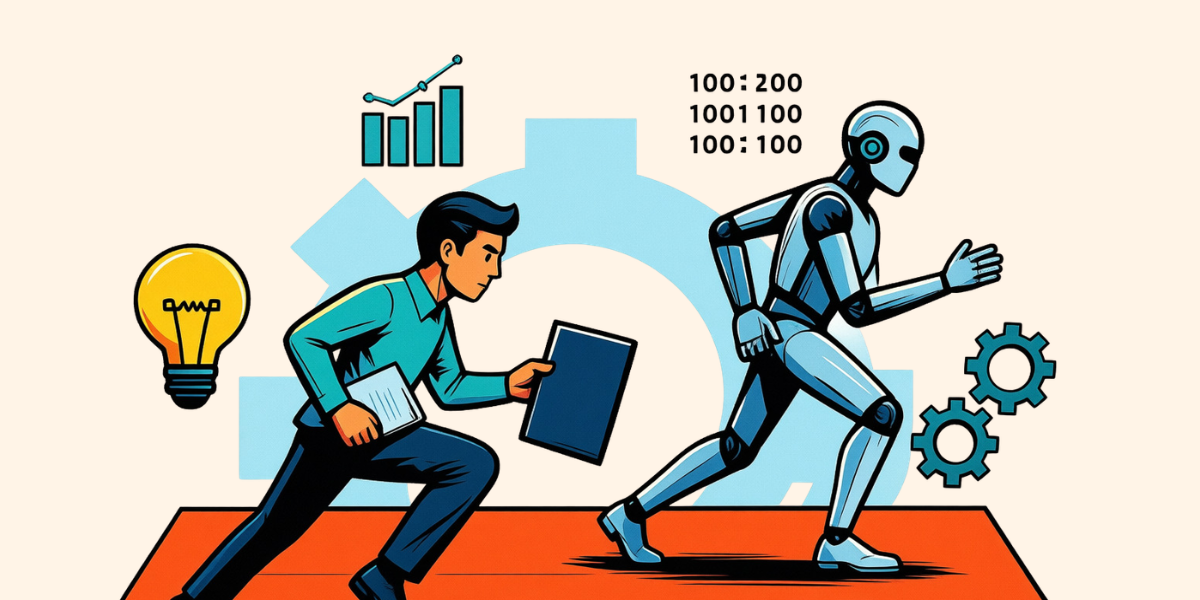
The debate between Human Translation and Machine Translation is increasingly becoming less relevant. Moreover, the future of translation is likely to involve human expertise supported by intelligent technology.
Furthermore, machines can provide speed, scale, terminology consistency, and first-pass translations. Human linguists can provide contextual judgment, cultural understanding, creativity, quality control, and accountability.
For businesses, the best workflow may therefore look like:
Machine Translation → Human Post-Editing → Quality Assurance → Final Delivery
The exact workflow can vary depending on the content, language pair, industry, and quality requirements.
Ultimately, technology should not be viewed as replacing linguistic expertise. It should be viewed as a tool that allows language professionals to work more efficiently while focusing their expertise where it matters most.
Whether a business chooses Human Translation, Machine Translation, or an MTPE workflow, the goal remains the same: to communicate accurately, naturally, and effectively across languages and cultures.